
Service
Women’s Health Physiotherapy
Specialist care, compassionate support, every step of the way.
Women’s health is deeply personal. Whether you’re recovering after having a baby, living with pelvic pain, navigating perimenopause or menopause, or experiencing symptoms you’ve never felt comfortable talking about — you deserve expert care and to be listened to. Our Women’s Health service is led by specialist physiotherapists dedicated exclusively to this field, combining clinical expertise with a compassionate, individual approach for women at every stage of life.
Many women normalise symptoms they’ve lived with for years: leaking when they laugh, pain during intercourse, pelvic heaviness, or a core that’s never felt the same since having children. These are common — but they are not something you simply have to accept.
Why Choose Us?
- Specialist physiotherapy-led care — every patient is seen by a physiotherapist with dedicated women’s health training, not a generalist
- Whole-person approach — we look beyond symptoms to understand how hormonal changes, lifestyle, posture and movement interact
- Integrated rehabilitation pathway — bringing together physiotherapy, clinical Pilates and gym-based strength and conditioning as one joined-up programme
- A safe, private, non-judgemental environment at every session
- Recognised by major insurers — Bupa, AXA and other leading providers
What to Expect
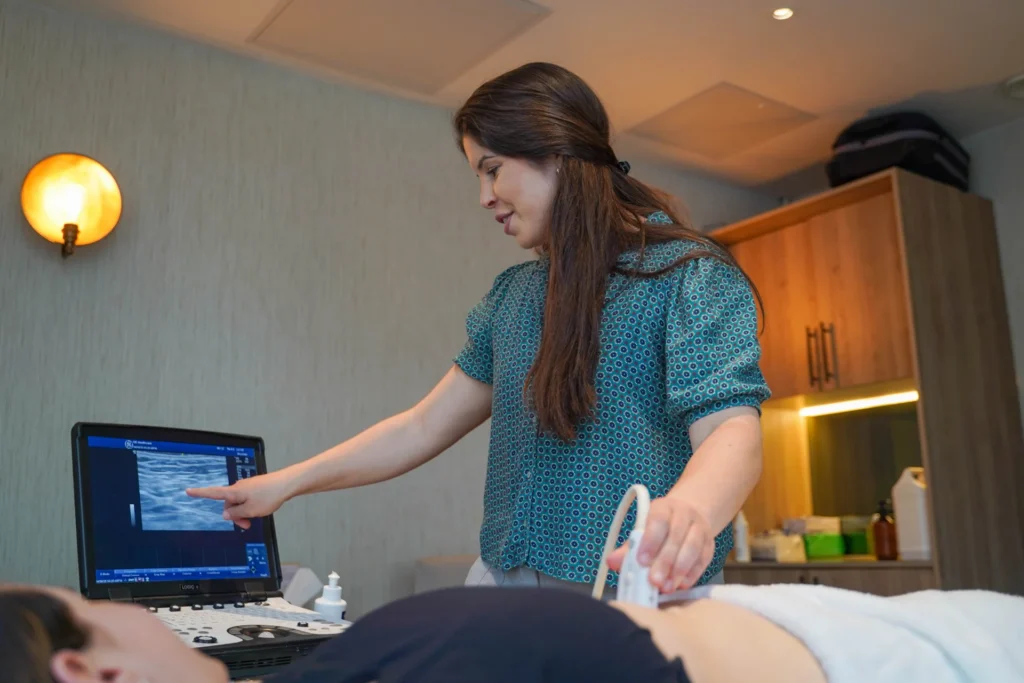
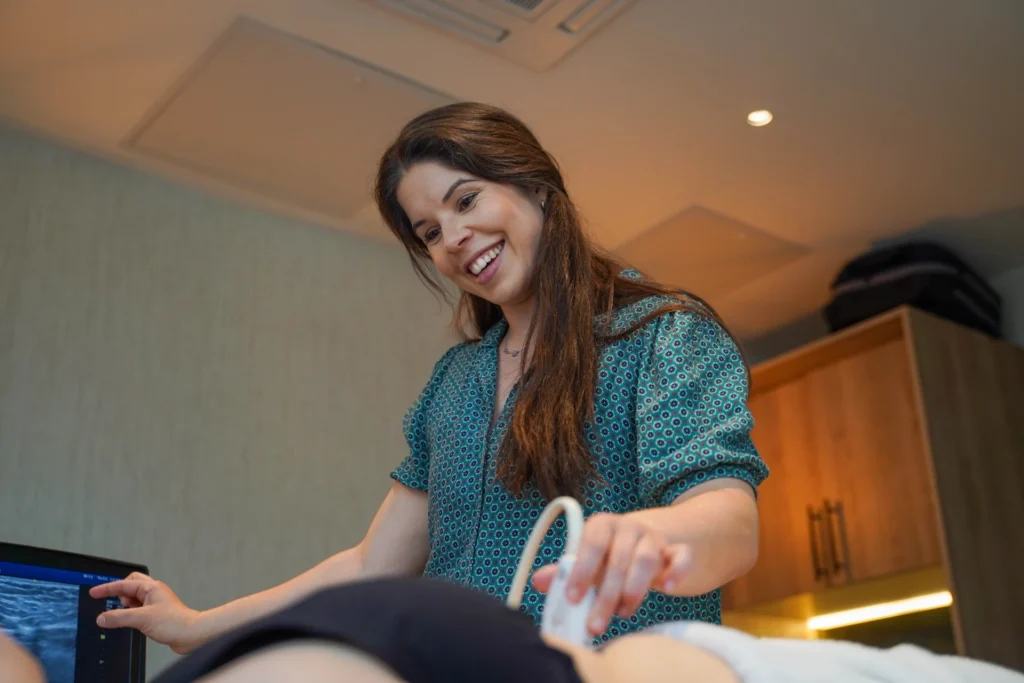
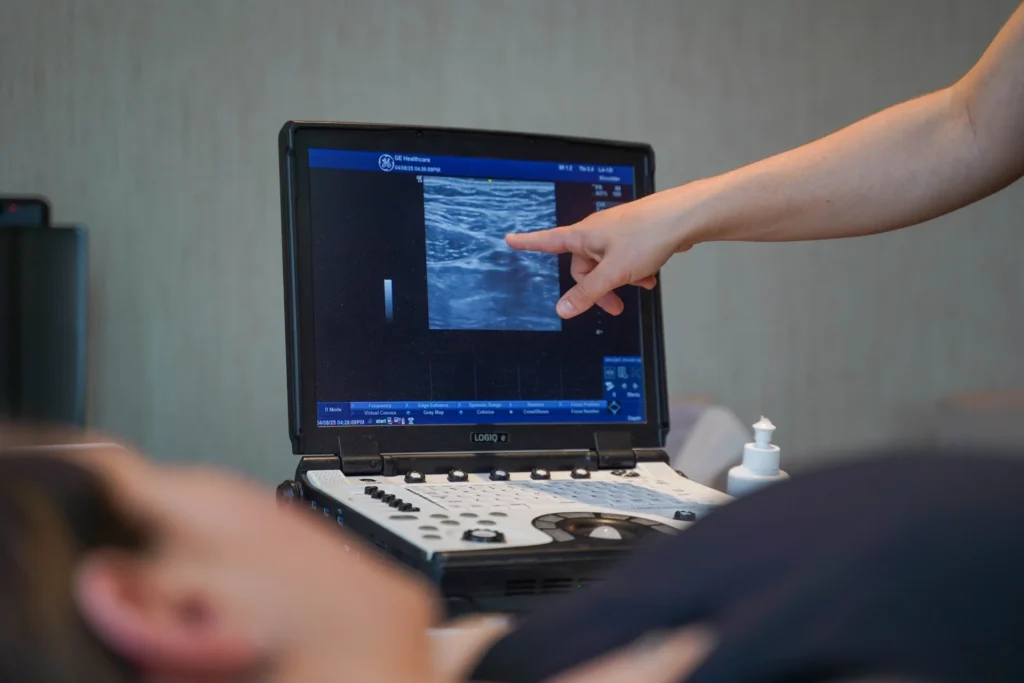
Your first appointment begins with a relaxed conversation about your symptoms, history and goals — at your own pace. We’ll then carry out a physical assessment, which may include posture, movement, breathing and abdominal function. Where appropriate, and only with your full informed consent, we may recommend an internal pelvic floor assessment. We also use real-time ultrasound for assessment of diastasis recti and for core activation retraining, giving both patient and clinician immediate visual feedback. Before you leave, you’ll have a clear diagnosis and a personalised treatment plan. As you progress, your programme is adapted to keep you moving forwards.
Conditions We Treat
- Stress and urge urinary incontinence
- Pelvic organ prolapse
- Pelvic girdle pain and SPD
- Diastasis recti
- Vaginismus and dyspareunia
- Chronic pelvic pain — vulvodynia, vestibulodynia
- Endometriosis and pelvic myofascial pain
- Interstitial cystitis
- Perimenopause musculoskeletal and pelvic floor changes
- Menopause and post-menopause pelvic health and GSM
- Postnatal rehabilitation and return to sport
- Perineal and caesarean scar restriction
- Bowel dysfunction
- Post-surgical rehabilitation
Our Services
Pelvic Floor Rehabilitation
Assessment and treatment for pelvic floor dysfunction — weakness, overactivity or poor coordination — including urinary leakage, urgency, pelvic organ prolapse, vaginismus, dyspareunia and hypertonic pelvic floor.
Pregnancy Physiotherapy
Specialist support throughout pregnancy to keep you comfortable and active. We treat:
- Pelvic girdle pain (PGP) and symphysis pubis dysfunction (SPD)
- Lower back pain, sciatica, and rib pain
- Urinary incontinence and diastasis recti monitoring
- Pelvic floor preparation for labour, and safe exercise guidance
Postnatal Physiotherapy
Expert support following vaginal or caesarean birth — whether your baby is six weeks or six years old. We treat:
- Pelvic floor and diastasis recti rehabilitation — including real-time ultrasound assessment and core activation retraining
- Perineal and caesarean scar management
- Return to exercise, including running and high-impact activity
- Bladder, bowel and prolapse management
- Postural pain from feeding and carrying
We recommend a specialist postnatal check-up at six to ten weeks, or as advised by your medical team.
Perimenopause Physiotherapy
Perimenopause is one of the most underserved areas of women’s health. Falling oestrogen affects connective tissue, bone density, joint lubrication and pelvic floor tone — but these changes don’t have to go unmanaged. We treat:
- New or worsening urinary leakage, urgency and prolapse symptoms
- Genitourinary syndrome — vaginal dryness, discomfort, recurrent infections
- Musculoskeletal pain: hip, knee, shoulder and core weakness
- Anxiety around exercise and fear of symptoms worsening
Menopause & Post-Menopause Physiotherapy
A whole-body approach — not just pelvic floor care — to build the physical resilience you need for the decades ahead. We treat:
- Pelvic floor rehabilitation and prolapse management
- Genitourinary syndrome of menopause (GSM)
- Bladder retraining and urge incontinence
- Bone health and loading exercise guidance
- Joint pain, muscle mass preservation and balance training
Chronic Pelvic Pain & Sexual Pain Disorders
Evidence-based treatment for endometriosis, pelvic myofascial pain, vulvodynia, vaginismus and dyspareunia, to improve comfort, function and quality of life.
Post-Surgical Rehabilitation
Structured recovery following hysterectomy, prolapse repair or caesarean birth, helping you return safely to everyday activities.
Pilates for Women's Health
Pilates is integrated into our women’s health pathway at every stage. When delivered by physiotherapists or specialist trained instructors who understand pelvic health, pregnancy, postnatal recovery and hormonal transitions, it becomes a clinical tool — not a fitness class.
- Physio-led Pilates — one-to-one sessions designed and supervised by your physiotherapist, with pelvic floor coordination integrated throughout
- Clinical Pilates — Reformer, Cadillac and Wunda Chair sessions providing resistance and sensory feedback to accelerate rehabilitation
- Instructor-Led Pilates — personalised sessions built around your fitness level and delivered by instructors with women’s health expertise
FAQs
Frequently Asked Questions
Do I need a GP referral?
No. You can self-refer directly. We work with Bupa, AXA and other major private health insurers — contact your insurer in advance to confirm your cover.
What happens at a pelvic floor assessment?
Your appointment begins with a detailed conversation about your symptoms and history. With your full informed consent, your physiotherapist may perform an internal examination to assess pelvic floor function. You are in control throughout and can decline any part of the assessment at any time.
Can physiotherapy help with leaking when I exercise or sneeze?
Yes. Stress urinary incontinence is one of the most common conditions we treat, and in most cases it responds very well to pelvic floor rehabilitation. It is not an inevitable consequence of having children or getting older.
Can physiotherapy help with perimenopause or menopause symptoms?
Yes. Physiotherapy can make a significant difference to leaking, prolapse, joint pain, pelvic discomfort and genitourinary changes at any hormonal life stage. It is never too late to start, and we work alongside your GP or menopause specialist where appropriate.
How soon after giving birth can I start?
Some treatment — breathing retraining, gentle pelvic floor activation and scar management — can begin within days. For a full assessment and rehabilitation programme, we recommend waiting until six to eight weeks postnatal, or until you have been cleared by your medical team.
What is the difference between physio-led and instructor-led Pilates?
Physio-led Pilates is a one-to-one clinical session, with your physiotherapist retaining clinical responsibility throughout. Instructor-led Pilates sessions are personalised to your fitness level and delivered by instructors with women’s health expertise — both formats are coordinated with the physiotherapy team.
Google Reviews
Check out our Google Reviews and see how we’ve helped others


 Trustindex verifies that the original source of the review is Google.
 Trustindex verifies that the original source of the review is Google.
 Trustindex verifies that the original source of the review is Google.
 Trustindex verifies that the original source of the review is Google.
 Trustindex verifies that the original source of the review is Google.
 Trustindex verifies that the original source of the review is Google.
 Trustindex verifies that the original source of the review is Google.

 Trustindex verifies that the original source of the review is Google.
 Trustindex verifies that the original source of the review is Google.
 Trustindex verifies that the original source of the review is Google.
Services
Other Services We Offer
Based in Mayfair, with further clinics in Marylebone, South Kensington and Liverpool Street, we offer you an excellent diagnostic ability to allow you the fastest route to recovery or optimising your health with our physiotherapy, movement, pilates, personal training, nutrition and medical screening.
Genetic Testing
C.Me Fit package offers you the latest medical innovation, using your unique genetic makeup to devise a bespoke nutrition and exercise programme.
Your genetic makeup determines the response of your metabolism and muscles allowing you to optimise eating habits and exercise routines in order to reach your goals effectively and safely.
Why choose C.Me Fit? We are a medical and specialist led service. Alongside your physical examination and tailored blood tests, our team of experts will work with you, helping to decode your genes and support you on the journey to healthy living.
Genetic fitness testing is becoming increasingly popular, but what makes C.Me Fit so effective is our team of health and wellbeing experts.
Using the nutrigenetic analysis as a guide, our experienced and highly-renowned Nutritionist, Physiotherapist and Personal Trainer will design and deliver an individually-tailored lifestyle programme.
For further information please visit www.chelseamedicsdna.co.uk
To book your appointment, please get in touch with the team at C.Me Fit by calling 0203 9555 444 or emailing enquiries@chelseamedics.co.uk
Chelsea Medics
Evolution Club ,Mayfair Health
230 Brompton Rd, SW3 2BB