
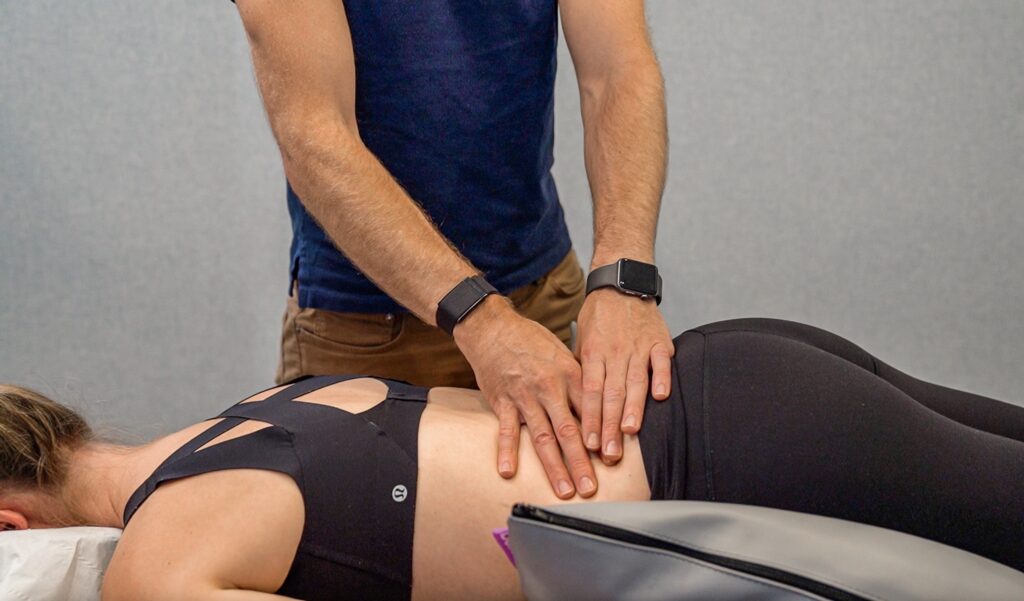
How we Help
Why Choose Us?
- Whole-body assessment: we look at how your entire body moves, not just the area that hurts — pain at one site is often caused by restriction or weakness elsewhere
- Experienced osteopaths: postgraduate training and extensive clinical experience across musculoskeletal, sports and general practice
- Integrated care: our osteopaths work alongside our physiotherapy and Pilates teams so your treatment is joined up from day one
- Evidence-based: hands-on techniques combined with exercise prescription, in line with NICE guidelines for musculoskeletal conditions
- Recognised by major insurers: we work with Bupa, AXA and other leading private health insurers
- Flexible appointments: early mornings, evenings and weekends available
Osteopathy and Physiotherapy: Complementary, Not Interchangeable
Both disciplines share significant common ground, with a shared commitment to restoring pain-free movement. The distinction lies in how each profession is trained to study the body, and the treatment approaches that follow.
Osteopaths study the body through the lens of whole-system integration, examining how the musculoskeletal, neurological, cardiovascular and visceral systems interrelate. Treatment is more heavily manual-therapy-led — soft tissue work, joint mobilisation, manipulation, and cranial and visceral approaches — working with the body’s capacity to self-regulate and heal, and addressing how restriction or compensation in one area drives symptoms elsewhere.
Physiotherapists are trained through a biomedical and movement science framework — anatomy, biomechanics, exercise physiology and rehabilitation. Their approach is typically exercise-led: identifying movement deficits, correcting dysfunctional patterns and rebuilding strength and function through structured progressive rehabilitation. Physiotherapy also spans highly specialised fields including women’s health, neurological rehabilitation and respiratory care.
In practice the two complement each other exceptionally well, and many patients benefit from both. At Mayfair Health, our osteopaths and physiotherapists work closely together and cross-refer where appropriate — so you always receive the right treatment, from the right practitioner, at the right time.
What Does Treatment Involve?
Your Initial Assessment
Your first appointment begins with a detailed case history — symptoms, previous injuries, medical history, and a broader systems review. Your osteopath will then carry out a thorough physical examination: observing movement, identifying restriction and compensation, and performing orthopaedic and neurological tests where relevant. A clear diagnosis and treatment plan are established before any hands-on work begins.
Treatment Techniques
Treatment is tailored to your presentation and may include:
- Soft tissue massage and myofascial release: to reduce muscle tension and improve tissue quality
- Joint mobilisation: to restore range of motion at specific joints
- High-velocity low-amplitude manipulation: to release joint restriction where appropriate — the technique sometimes associated with an audible click
- Functional and indirect techniques: for more sensitive or acute presentations
- Cranial osteopathy: gentle, low-force treatment suited to certain conditions or patient preferences
- Visceral techniques: addressing the relationship between organ function and musculoskeletal health where relevant
- Exercise prescription: personalised clinical Pilates-based exercises to consolidate in-session gains and build long-term resilience
Your osteopath will also identify the postural, lifestyle or biomechanical factors contributing to your condition and build a plan to address them — including referral to our physiotherapy or Pilates team as your needs evolve.
Conditions We Treat
- Back pain — acute, chronic and recurrent
- Neck pain and cervicogenic headaches
- Sciatica and nerve-related leg pain
- Hip, knee, shoulder and ankle pain
- Sports injuries and overuse conditions
- Postural pain from desk work or repetitive activity
- Arthritic and rheumatic pain
- Muscle spasm and myofascial pain
- Fibromyalgia and chronic widespread pain
- Digestive complaints with a musculoskeletal component
- Pregnancy-related musculoskeletal pain
- Stress-related tension
- Hypermobility and connective tissue disorders
- Post-surgical rehabilitation
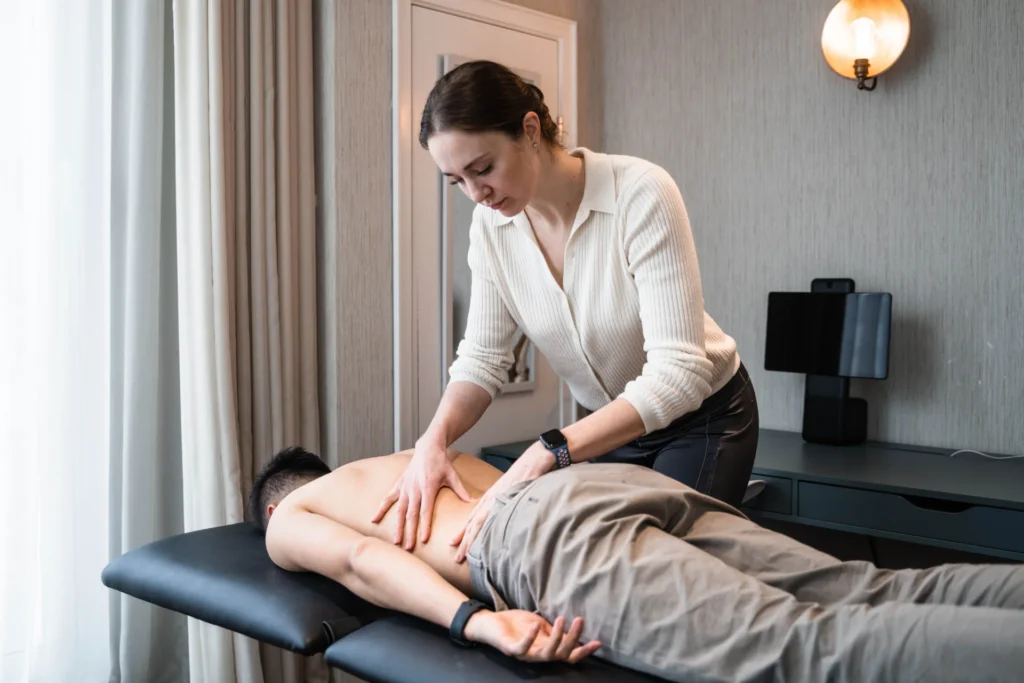
FAQs
Frequently Asked Questions
What is the difference between an osteopath and a physiotherapist?
Both are regulated musculoskeletal healthcare professionals with significant overlap in the conditions they treat. Physiotherapy is more rehabilitation and exercise-led; osteopathy takes a broader whole-body perspective with more extensive hands-on manual therapy. The two work exceptionally well together — our team communicates closely and cross-refers where appropriate.
What is the difference between an osteopath and a chiropractor?
Both use spinal manipulation, but chiropractors focus primarily on restoring nerve function through spinal adjustment, while osteopaths take a whole-body approach considering all body systems — musculoskeletal, neurological, cardiovascular and visceral — alongside lifestyle factors.
Is osteopathy recommended by NICE?
Yes. Manual therapy, including osteopathic manipulation, is a recommended treatment for low back pain in NICE guidelines, alongside exercise prescription.
How many sessions will I need?
It varies by condition and how long you have had it. Many patients notice significant improvement within two to four sessions. Your osteopath will give you a realistic prognosis at your first appointment and keep you informed throughout.
What should I wear?
Something you are comfortable moving in — shorts and a loose t-shirt or vest top are ideal.
Do you treat sports injuries?
Yes. Our osteopaths have extensive experience across a wide range of sports, from recreational runners to professional athletes, working closely with our physiotherapy team to provide integrated support from injury through to performance.
Google Reviews
Check out our Google Reviews and see how we’ve helped others


 Trustindex verifies that the original source of the review is Google.
 Trustindex verifies that the original source of the review is Google.
 Trustindex verifies that the original source of the review is Google.
 Trustindex verifies that the original source of the review is Google.
 Trustindex verifies that the original source of the review is Google.
 Trustindex verifies that the original source of the review is Google.
 Trustindex verifies that the original source of the review is Google.

 Trustindex verifies that the original source of the review is Google.
 Trustindex verifies that the original source of the review is Google.
 Trustindex verifies that the original source of the review is Google.