
How we Help
Why Choose Mayfair Health?
- Physiotherapist-delivered — all needling is performed by qualified physiotherapists with specialist acupuncture training — not standalone acupuncturists or complementary therapists
- Integrated into your treatment plan — needling is used alongside manual therapy and exercise rehabilitation as part of a comprehensive, clinically reasoned approach
- Evidence-based — we use western medical acupuncture and dry needling techniques grounded in musculoskeletal science and neuroscience
Acupuncture and Dry Needling — What Is the Difference?
Western Medical Acupuncture / Dry Needling
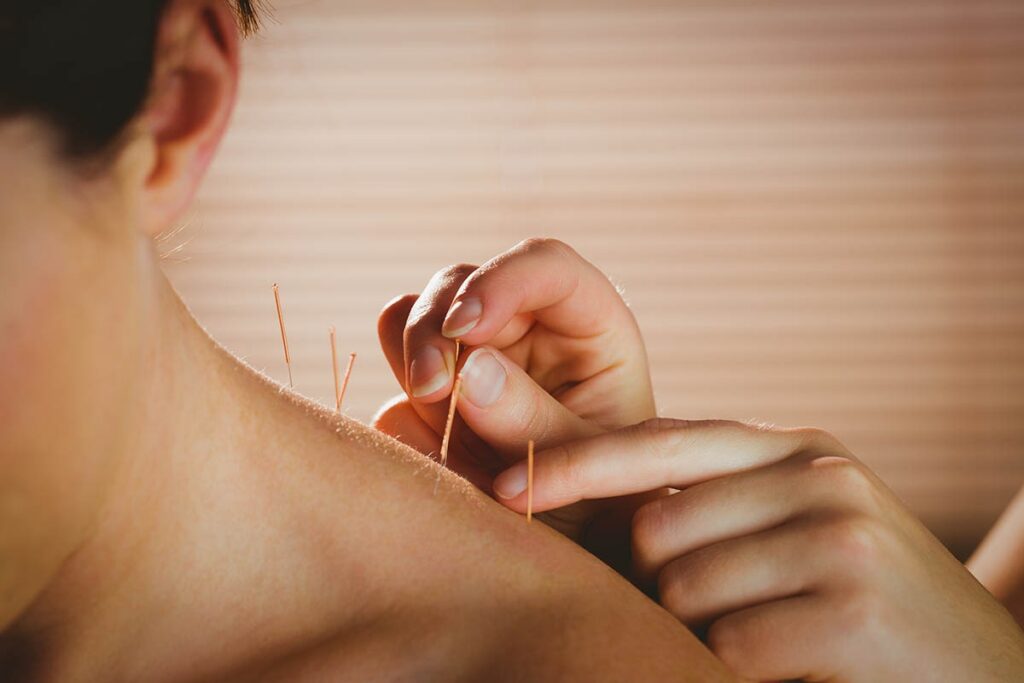
Western dry needling uses fine needles to target myofascial trigger points — localised, hypersensitive spots within a muscle that contribute to pain, restricted movement and altered muscle function. Insertion of the needle stimulates chemical processes that promote healing, reduce inflammation, inhibit pain responses and improve muscle stiffness. It is grounded in anatomy, physiology and evidence-based medicine rather than traditional Chinese philosophy.
Traditional Acupuncture
Traditional acupuncture is rooted in Chinese medicine, which holds that the body has over 2,000 acupuncture points connected by energy pathways (meridians). Stimulating these points is thought to restore the flow of Qi (energy) and support overall health. At Mayfair Health, our physiotherapists use western medical acupuncture principles; however, the distinction between approaches is explained fully at your appointment.
How Does It Work?
Dry needling and acupuncture produce both local and central nervous system responses. Locally, the needle stimulates tissue healing and reduces trigger point activity. Centrally, it has been shown to inhibit descending pain pathways — reducing the body’s overall response to painful stimuli. This is why needling can address referred pain patterns as well as the site of primary discomfort; for example, needling the calf can improve referred pain into the Achilles tendon.
Clinical research demonstrates that dry needling can immediately improve pain threshold, increase range of motion, decrease muscle tone and reduce pain in patients with musculoskeletal conditions. Effects typically last two to three days post-treatment.
Conditions We Treat
- Low back pain
- Neck pain
- Migraine and tension-type headaches
- Hip pain
- Plantar fasciitis
- Jaw and mouth dysfunction (TMD)
- Tennis and golfer’s elbow
- Kneecap and patella conditions
- Gluteal and patellar tendinopathy
- Shoulder pain and rotator cuff conditions
Benefits of Acupuncture and Dry Needling
- Reduction in pain — typically lasting two to three days per session
- Increased range of movement at shoulder, hip and other joints
- Reduced muscle stiffness and tension
- Stimulation of tissue healing and recovery
- Improved completion of everyday activities and function
- Decreased stress and anxiety
FAQs
Frequently Asked Questions
Does acupuncture hurt?
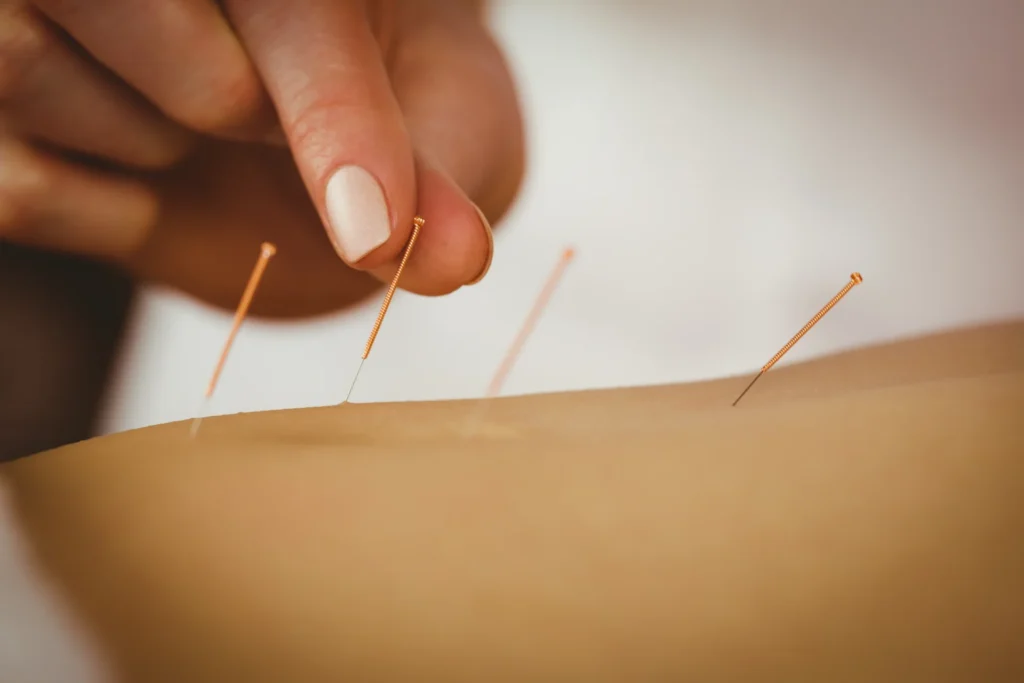
Acupuncture and dry needling are generally pain-free. Depending on the area of the body and the needling technique used, you may experience a brief dull ache or twitching sensation — this subsides within seconds. Post-treatment symptoms can last a few hours but generally resolve fully within one day.
How quickly will I feel the effects?
The effects are generally felt shortly after treatment — reductions in pain, muscle stiffness and improved movement are typically noticeable when exercising the specific area. These improvements can last up to two to three days following each session.
How many sessions will I need?
This depends on your condition and how your body responds. Needling is used as part of your wider physiotherapy plan, and your physiotherapist will advise on the frequency and number of sessions most appropriate for your presentation. Many patients notice meaningful improvement within two to four sessions.
Is it safe?
Yes. When performed by a qualified physiotherapist, acupuncture and dry needling are safe, well-tolerated interventions with a very low risk of adverse effects. All Mayfair Health physiotherapists using needling techniques follow strict clinical protocols.
Do I need a GP referral?
No. You can self-refer directly. Acupuncture and dry needling are typically incorporated into a physiotherapy appointment rather than booked as a standalone treatment — contact our team to discuss the most appropriate appointment type for your needs.
Is acupuncture covered by private health insurance?
Acupuncture delivered by a physiotherapist as part of a physiotherapy appointment may be covered under your physiotherapy benefit. We recommend contacting your insurer in advance to confirm your level of cover.
Google Reviews
Check out our Google Reviews and see how we’ve helped others


 Trustindex verifies that the original source of the review is Google.
 Trustindex verifies that the original source of the review is Google.
 Trustindex verifies that the original source of the review is Google.
 Trustindex verifies that the original source of the review is Google.
 Trustindex verifies that the original source of the review is Google.
 Trustindex verifies that the original source of the review is Google.
 Trustindex verifies that the original source of the review is Google.

 Trustindex verifies that the original source of the review is Google.
 Trustindex verifies that the original source of the review is Google.
 Trustindex verifies that the original source of the review is Google.