How we Help
Understanding Shoulder Pain
Shoulder pain can arise from a wide range of structures including the rotator cuff tendons, bursa, labrum, acromioclavicular joint, glenohumeral joint, and the surrounding muscles and nerves. It may develop gradually through overuse or postural strain, or suddenly through trauma or a specific incident.
Common shoulder conditions we treat include rotator cuff tears and tendinopathy, frozen shoulder, shoulder impingement syndrome, shoulder instability and recurrent dislocation, acromioclavicular joint injuries, labral tears, and post surgical rehabilitation following shoulder surgery or reconstruction.
Symptoms may include pain with overhead movements, weakness, restricted range of motion, clicking or catching sensations, night pain, or a general feeling of instability in the joint.
How We Can Help
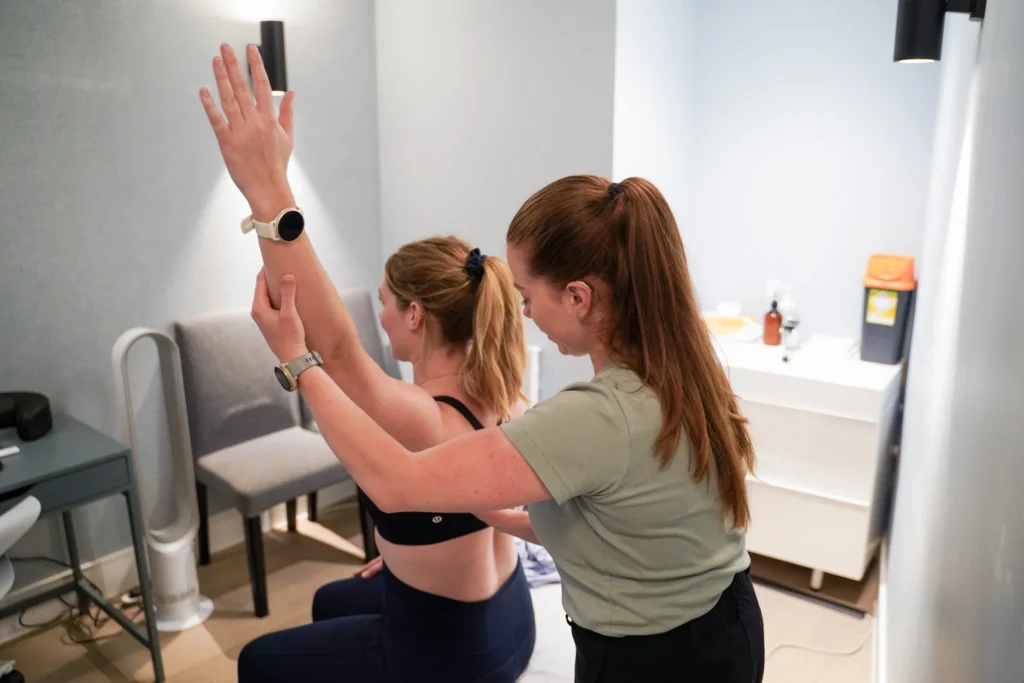
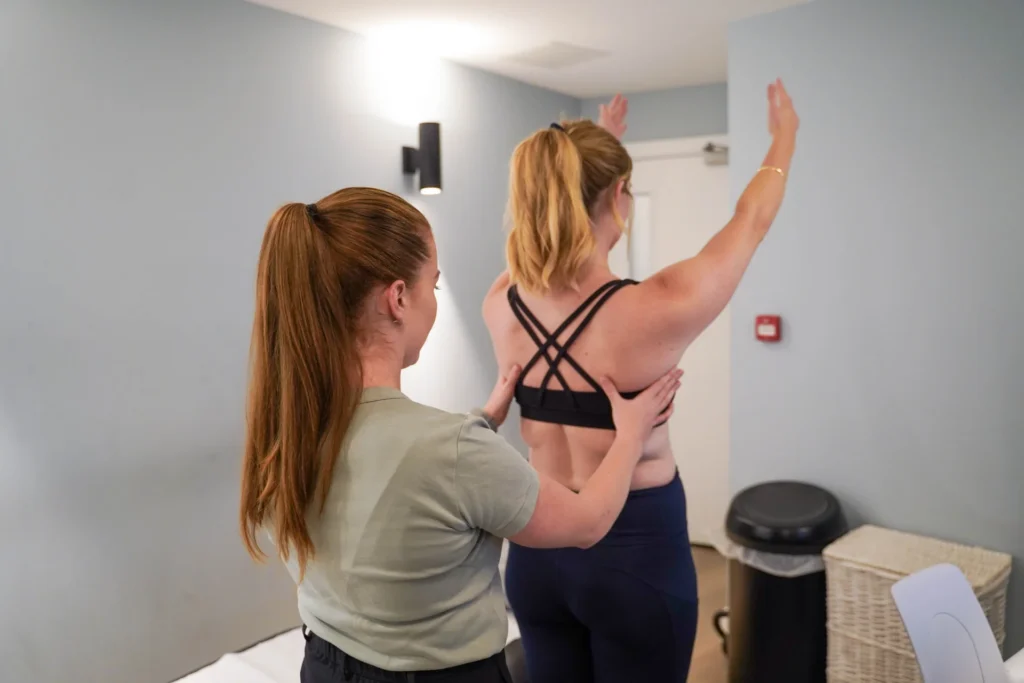
Effective shoulder treatment begins with accurate diagnosis, which requires a detailed understanding of the shoulder’s complex anatomy and biomechanics. Our clinicians assess joint mobility, rotator cuff strength, scapular control, postural alignment, and movement patterns to identify precisely what is driving your symptoms.
Treatment is tailored to your diagnosis and may include manual therapy, joint mobilisation, rotator cuff and scapular stabilisation rehabilitation, postural correction, activity modification, and a progressive return to sport or return to activity programme. Where imaging or surgical consultation is indicated, we will coordinate that referral directly.
We are highly experienced in managing complex and recurrent shoulder conditions including patients who have had previous physiotherapy, injections, or surgery without achieving the outcome they hoped for.
What to Expect
We recommend starting with a comprehensive 60 minute assessment. You will leave with a clear diagnosis, an understanding of the contributing factors, and a structured treatment plan.
No GP referral required. Available across all clinics.