
Why Choose Our Hypermobility Service?
- Specialist Physiotherapy-Led Care: Every programme is designed and overseen by physiotherapists with specialist training in hypermobility and connective tissue disorders.
- Multidisciplinary Team: We have strong, established relationships with some of London’s leading rheumatologists, pain management consultants and clinical psychologists. Where your needs extend beyond physiotherapy, we know exactly who to refer you to — and we stay involved throughout.
- Fully Integrated Approach: Physiotherapy assessment, clinical Pilates, full equipment Pilates and instructor-led classes work together as one joined-up pathway — not as separate, disconnected services.
- Recognised by Major Insurers: We work with Bupa, AXA and other leading private health insurers.
- Flexible Appointments: Early mornings, evenings and weekends available to fit around your life.
Our Hypermobility Physiotherapy Pathway
Comprehensive Assessment
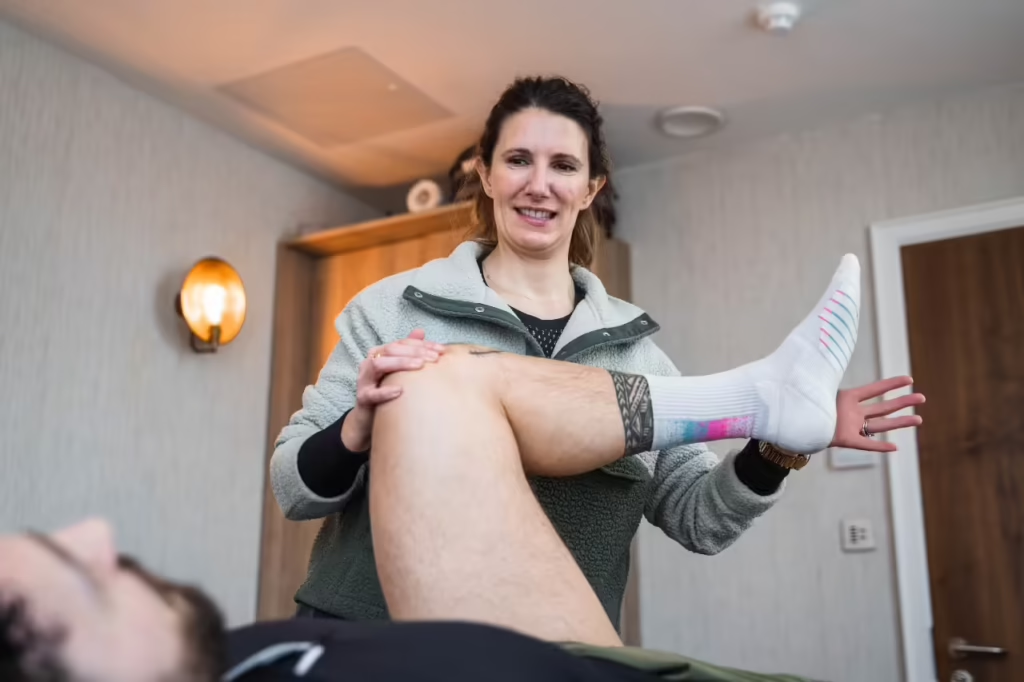
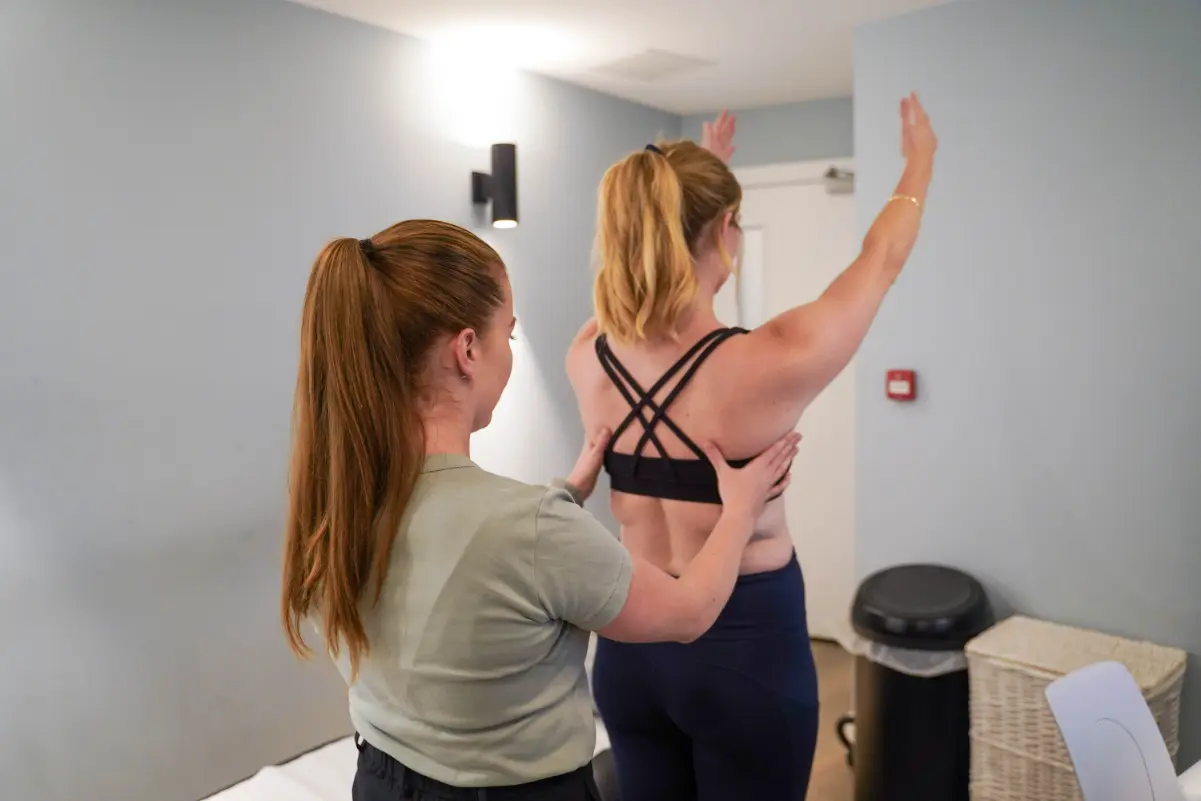
Every new patient begins with an in-depth physiotherapy assessment. We take time to understand your full history — including previous diagnoses, pain patterns, fatigue levels, autonomic symptoms and the impact on your daily life. We carry out detailed movement screening and joint stability testing to build a clear clinical picture before any treatment begins.
Evidence-Based Treatment
Our physiotherapists draw on the latest research in hypermobility management. Treatment may include:
- Targeted joint stabilisation and proprioception training
- Soft tissue therapy and myofascial release
- Taping techniques to support unstable joints
- Breathing pattern retraining
- Pain education and nervous system regulation strategies
- Guidance on pacing, fatigue management and activity modification
Clinical Pilates for Hypermobility
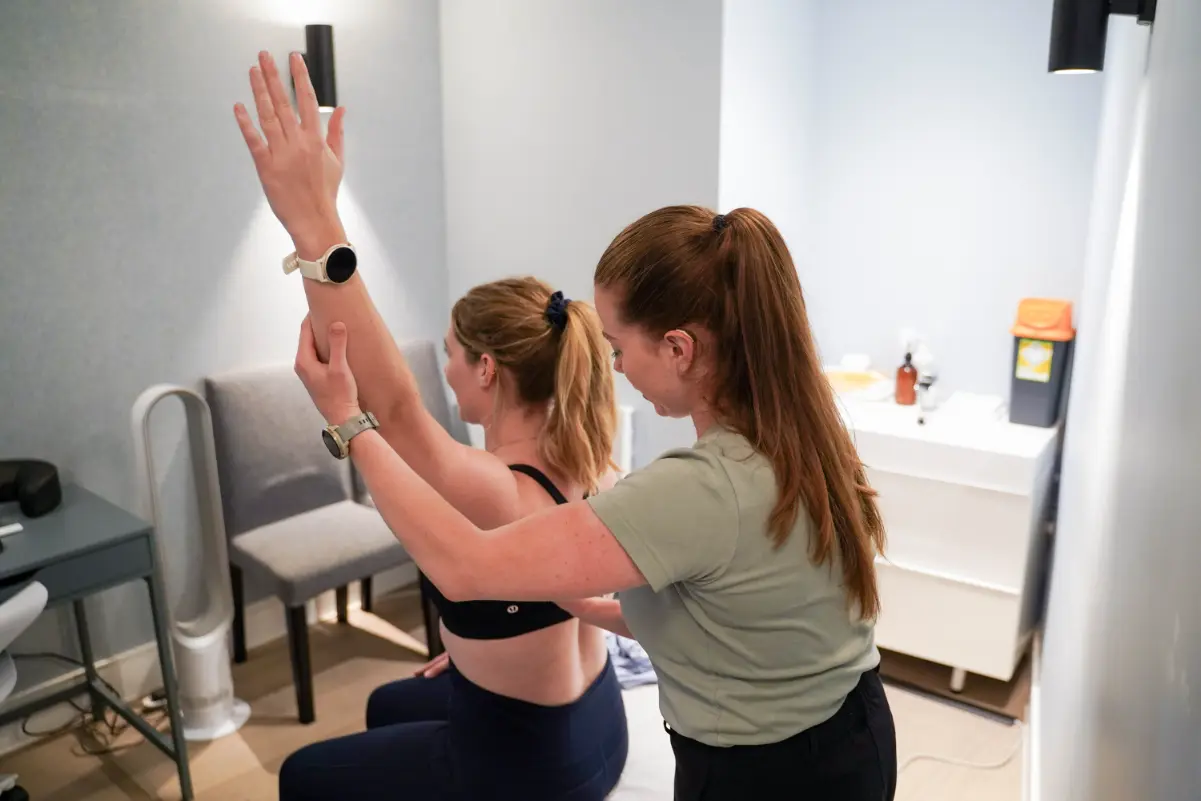
Clinical Pilates is one of the most effective tools available for hypermobile bodies — but only when it is delivered correctly. Our physiotherapy-led Pilates sessions are designed specifically for people with hypermobility, ensuring that every exercise promotes joint stability rather than end-range loading. Your physiotherapist remains clinically responsible throughout, adapting each session to your presentation, your pain levels and your progress.
Gym-Based Exercise and Strength Rehabilitation
Structured strength work is one of the most important tools in hypermobility management. Our physiotherapists design progressive, gym-based programmes that build the muscular support your joints depend on — moving you from pain management into genuine physical resilience, at a pace your body can tolerate.
Multidisciplinary Care for Hypermobility
Hypermobility — particularly hEDS and HSD — is rarely a purely physical condition. Chronic pain, fatigue, autonomic dysfunction and the psychological toll of living with a poorly understood illness mean that physiotherapy alone, however specialist, is not always sufficient. Effective hypermobility management often requires a team.
At Mayfair Health, we have built strong, established relationships with some of London’s leading specialists in the fields most relevant to hypermobility. These are not ad hoc referrals — they are trusted clinical partnerships, developed over years of working together on shared patients. When your needs extend beyond physiotherapy, we know exactly who to call.
Depending on your presentation, your care team may include:
- Pain management consultants and specialists: we work closely with leading London pain consultants who understand the complexity of centralised and chronic pain in hypermobility. For patients whose pain has not responded to physiotherapy alone, they can offer pharmacological management, interventional procedures and advanced pain science approaches that work in parallel with your rehabilitation
- Clinical psychologists and therapists: we have established relationships with specialist psychologists experienced in chronic illness and persistent pain. Psychological support — including Acceptance and Commitment Therapy (ACT) and Cognitive Behavioural Therapy (CBT) — can be profoundly effective alongside physical rehabilitation, particularly for patients managing pain catastrophising, health anxiety, or the emotional weight of a long-term diagnosis
- Rheumatologists: our network includes some of London’s most experienced connective tissue and hypermobility rheumatologists, who can provide formal diagnosis, ongoing medical oversight and co-management of complex hEDS and HSD presentations
- Cardiologists and autonomic specialists: where POTS or significant dysautonomia requires specialist investigation or medical management beyond the scope of physiotherapy, we can refer directly to trusted colleagues with specific expertise in this area
Your physiotherapist will coordinate your care, liaise directly with your wider team, and ensure that everything happening across your care is aligned. You will never be left to navigate London’s medical landscape alone — we have done that groundwork for you.
Conditions We Support
- Hypermobile Ehlers-Danlos Syndrome (hEDS)
- Hypermobility Spectrum Disorder (HSD)
- Joint instability and recurrent sprains
- Dysautonomia and POTS associated with hypermobility
- Chronic widespread pain
- Post-dislocation and subluxation rehabilitation
- Fatigue and deconditioning
- Postural tachycardia and breathing pattern dysfunction
- Co-occurring conditions including fibromyalgia and chronic fatigue
FAQs
Frequently Asked Questions
What is hypermobility?
Hypermobility refers to joints that move beyond the normal range of motion due to laxity in the connective tissues — ligaments, tendons and fascia — that provide structural support. For some people this causes no difficulties, but for others it leads to joint instability, pain, fatigue and a wide range of systemic symptoms. Hypermobile Ehlers-Danlos Syndrome (hEDS) and Hypermobility Spectrum Disorder (HSD) are the most commonly diagnosed conditions on the hypermobility spectrum.
Why do I need a physiotherapist rather than a regular Pilates instructor?
Hypermobility requires a fundamentally different approach to exercise. Movements and positions that are beneficial for most people can increase instability or cause harm in a hypermobile body. A physiotherapist with specialist hypermobility training understands how to identify compensatory movement patterns, load joints appropriately and progress rehabilitation safely. Our physio-led Pilates sessions are clinical interventions, not fitness classes.
What is the difference between physio-led Pilates and instructor-led Pilates?
Physio-led Pilates is delivered by your physiotherapist as part of your treatment programme. Your physiotherapist retains clinical responsibility and tailors every session to your current symptoms and rehabilitation goals. Instructor-led Pilates is delivered by our specialist Pilates instructors and is typically introduced at a later stage, once a foundation of stability and body awareness has been established. Both formats are informed by the physiotherapy team and kept closely aligned.
How long will my treatment programme last?
Every patient is different, and your programme will be designed around your specific needs and goals. Some patients make significant progress in eight to twelve weeks; others with more complex presentations benefit from longer-term support. We will review your progress regularly and be transparent about what to expect at every stage.
Do you see patients with POTS or dysautonomia alongside hypermobility?
Yes. We understand that many people with hEDS and HSD also experience dysautonomia, POTS, or related conditions that affect exercise tolerance. Our physiotherapists are experienced in adapting rehabilitation programmes for patients with these co-occurring presentations, including posture-based cardiovascular strategies and carefully graded reconditioning.
Do you work with other specialists as part of my care?
Yes — and this is something we take seriously. We have built strong, established relationships with some of London’s leading rheumatologists, pain management consultants and clinical psychologists who specialise in hypermobility and chronic connective tissue conditions. These are trusted clinical partnerships, not one-off referrals. When your needs extend beyond physiotherapy, your physiotherapist will make a direct, informed introduction to the right specialist — and will continue to liaise with them throughout your care. You will never be left to navigate the wider medical system alone.
Is hypermobility physiotherapy covered by private health insurance?
We work with Bupa, AXA and other major private health insurers. We recommend contacting your insurer in advance to confirm your level of cover for physiotherapy and clinical Pilates. Our team is happy to assist with any queries about the process.
How do I get started?
You can self-refer by booking directly online or by contacting our team. No GP referral is required, though we are happy to liaise with your GP or consultant where appropriate.
Google Reviews
Check out our Google Reviews and see how we’ve helped others


 Trustindex verifies that the original source of the review is Google.
 Trustindex verifies that the original source of the review is Google.
 Trustindex verifies that the original source of the review is Google.
 Trustindex verifies that the original source of the review is Google.
 Trustindex verifies that the original source of the review is Google.
 Trustindex verifies that the original source of the review is Google.
 Trustindex verifies that the original source of the review is Google.

 Trustindex verifies that the original source of the review is Google.
 Trustindex verifies that the original source of the review is Google.
 Trustindex verifies that the original source of the review is Google.