
BOOK NOW

Echolight REMS Scan

What Is An Echolight REMS?

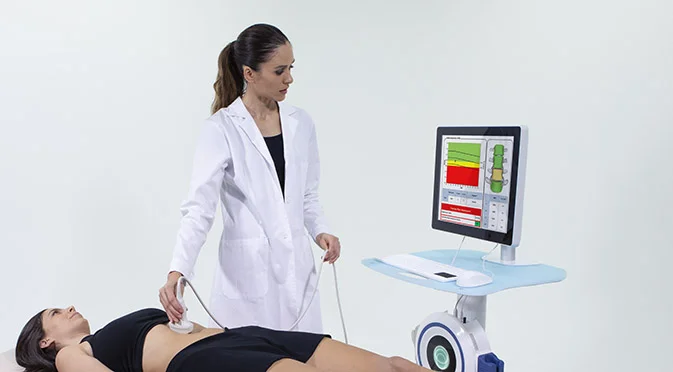
Echolight REMS (Radiofrequency Echographic Multi Spectrometry) is a next-generation diagnostic tool used to detect osteoporosis and identify individuals at risk of other bone-related conditions.

Unlike traditional scan, REMS is radiation-free, painless, non-invasive and reliable. This enables our team to detect early signs of bone loss or other bone health diseases, allowing for early intervention before significant bone deterioration occurs and thereby giving you the chance to take timely preventive measures.

As scan results are available within minutes, our clinicians can discuss your bone health immediately, create a personalised bone strengthening plan and monitor your progress over time. With regular follow-ups, we can then track changes in your bone health and adjust treatment strategies accordingly when required.

How Does It Help?

The Echolight REMS Scan helps by providing a non-radiation based measurement tool that is low cost, low risk and time effective. Once a baseline measurement has been established, it is recommended that you have your scan repeated in approximately 12 months to assess the effectiveness of any interventions that you have partaken in to inform decisions about how to manage this in the future. This will be guided by your clinician and is tailored to what you need and how it can fit into your lifestyle.

How Does It Compare to DEXA Scan?

Both a DEXA and Echolight scan measure what is called bone mineral density and this is depicted as a T-score. A T-score of less than –2.5 is used to diagnose osteoporosis.

A DEXA scan measures the thickness and strength of bones by passing low- and high-energy X-rays through the body. This is what has traditionally been used to measure bone health however can be subject to lower accuracy as the scans are interpreted by a person meaning there can be differences in scoring between radiologists.

An Echolight is a more recent advancement in the measurement of bone health and uses ultrasound waves instead of radiation. Using the ultrasound, the machine gives a computer-generated reading of not only bone mineral density but additionally a “fragility score”. This is a measurement of the quality of the bone’s microarchitecture and has been shown in research to be more reliable in determining someone’s fracture risk.

Who Is This For?

This is beneficial for anyone who wants to understand more about their bone health. Given that it doesn’t emit radiation like a DEXA scan does, it can be used as a screening tool with less risk and performed more frequently.

N

Women over 50 (1 in 2 will experience osteopenia or osteoporosis)

N

Young individuals looking to maximise their peak bone density

N

Anyone with a family history of osteoporosis

N

Anyone with low body weight or previous fractures

N

Individuals on long-term medication affecting bone strength

Research shows that 1 in 2 women over the age of 50 will develop osteopenia or osteoporosis, often without realising their bones are weakening. Because bone loss is silent, many people only discover the problem after a fracture.

The lower your bone density, the more urgent and intensive the interventions required. That’s why it’s far better to act early. Having your bones scanned when you are younger, or if you have risk factors, allows you to be proactive rather than reactive. With timely assessment, there are many effective interventions that can maintain, protect, and even rebuild bone strength.

How Does It Work?

The REMS technology works by analysing ultrasound signals from the spine and femur – two of the most common sites of osteoporotic fractures.

It measures:

K

Bone density (T-score and Z-score)

K

Bone quality (Fragility Score – a unique marker of bone microarchitecture)

By combining these metrics, REMS provides one of the most accurate predictions of fracture risk available today.

It uses non-invasive ultrasound technology to scan and provide precise measurements of bone density (measured as T-score and Z-score) and quality measured as a fragility score).

What Happens During The Session?

Arrival: Arrive 5–10 minutes before your appointment and complete a short form in our waiting room.

Scan: While lying comfortably on the bed, our clinician will place an ultrasound probe on your abdomen and hip area. No need to change clothes.

Results and Consultation: You’ll receive your results immediately and a full explanation of your bone health status. Your clinician will also provide tailored recommendations for lifestyle changes, bone-specific physiotherapy or further medical referral if needed.

Ready to book?

If you're ready to book you can use our online booking system by clicking below. 

How Can We Help?

INTERESTED IN OUR BONE HEALTH CLINIC?

SEND US A MESSAGE USING THE FORM BELOW AND ONE OF OUR TEAM WILL BE IN TOUCH ASAP!


FAQs:

DEXA vs. EchoLight: What’s the difference?

Both a DEXA and Echolight scan measure what is called bone mineral density and this is depicted as a T-score. A T-score of less than –2.5 is used to diagnose osteoporosis.

A DEXA scan measures the thickness and strength of bones by passing low- and high-energy X-rays through the body. This is what has traditionally been used to measure bone health however can be subject to lower accuracy as the scans are interpreted by a person meaning there can be differences in scoring between radiologists.

An Echolight is a more recent advancement in the measurement of bone health and uses ultrasound waves instead of radiation. Using the ultrasound, the machine gives a computer-generated reading of not only bone mineral density but additionally a “fragility score”. This is a measurement of the quality of the bone’s microarchitecture and has been shown in research to be more reliable in determining someone’s fracture risk.

Is it safe to exercise with low bone density or osteoporosis? How much exercise is needed?

Not only has research shown that it is SAFE to exercise with low bone density or osteoporosis, but that it is NECESSARY. The formation of new bone is stimulated when placed under mechanical load and this is the cornerstone of our bone health program. As physiotherapists, we are trained to safely and gradually load the skeleton through exercise using machines and weights to increase the adaptive response of bone to increase bone mineral density.

A landmark trial in Australia (2018) showed that those who partook in supervised strength training 2x week for 9 months, as well as
those who participated in a 15-minute weekly BioDensity session saw improvements in their bone mineral density
compared to those who did bodyweight exercise, balance training and stretching over the same duration.

In the trial, participants were required to lift heavy weight relative to their baseline strength and there were no reported injuries besides 2 participants missing one session due to some lower back tightness. This shows that exercise is safe, with the Royal Osteoporosis Foundation recommending strength training as the first line of treatment.

How frequent are the sessions, and do I need to continue them indefinitely?

This can be tailored to the individual. The research recommends for the BioDensity program 1x weekly is needed, and for the strength training protocol 2x weekly is needed. This is undertaken over the course of 9 months. The research group who conducted the initial study are still in the process of collecting the data to analyse how long this benefit remain, for individuals who stop completely compared to those who continue.

Our recommendation is that strength training +/- the BioDensity should become part of an active lifestyle long term post the 9-month program, as it is so important and necessary for maintaining a healthy body. When you see your physiotherapist, it is important to discuss this with them to construct a realistic plan together that can ensure you are able to maintain the gains you make in the best possible way.

At what age should I start paying attention to bone health?

At the risk of sounding like a cliche, it is never to early OR too late to start thinking about bone health. For kids and teens, engaging in sports and multi-directional activity helps to develop your PEAK bone mass. This occurs in your mid-twenties where you ideally have strong and healthy bones so that as it gradually declines over time with age, it takes longer for it to develop into osteopenia or osteoporosis.

For those between the age of 18-35 this is where it is essential to start developing good habits and making strength training a part of your lifestyle, as we know this can help build strong muscles and bones. This makes it easier to maintain as you get older, and being proactive, rather than waiting for a diagnosis of osteoporosis to trigger a change in lifestyle.

For adults at any age who have been diagnosed with lower bone mineral density, or simply those who want to prevent the risk of developing osteoporosis, the time is now to start making steps in the right direction. This can involve getting an Echolight scan to get a baseline measurement of what the bone mineral density AND bone quality is like. It can mean starting to pay more attention to things such as nutrition, stress and sleep which we know have a huge impact on bone health as well as almost all the diseases of modern life.

Can exercise reverse low bone density?

YES is the short answer. A landmark trial in Australia (2018) showed that that those who partook in supervised strength training 2x week for 9 months, as well as those who underwent a 1x weekly 15-minute BioDensity session improved their bone mineral density compared to those who did bodyweight exercise, balance training and stretching over the same duration.

In the trial, participants were required to lift heavy weight relative to their baseline strength and there were no reported injuries besides 2 participants missing one session due to some lower back tightness. This shows that exercise is safe, with the Royal Osteoporosis Foundation recommending strength training as the first line of treatment.

Should all high-impact activities be avoided?

The short answer is no. This is dependent on a number of different factors. High impact activity is great for bones and is a necessary component of a program to address weaker bones as the high forces can help stimulate new bone adaptation. One way to assess if someone is eligible for this is by looking at their fragility score (acheived with an Echolight) that can measure their bone quality and dynamic strength. This can mean that someone with osteoporosis who has a good fragility score means they are safer to engage in high impact activities (within reason) compared to someone with a poor fragility score.

When we are younger, high impact activity that is done safely is fantastic and should be encouraged as this helps build our peak bone mass and strengthen our bones by exposing it to stimuli that generates an osteogenic response. This means that the bones increase their bone mineral density over time to better tolerate these forces which leads to stronger bones as we get older.

Is it safe to lift weights with low bone density?

YES! Not only is it safer but it is necessary and the foundation of building stronger bones, especially if you have osteoporosis. The only danger with lifting weights is when it is done with poor technique or without adequate supervision (for those who are new to the gym). This is where injuries can occur as it can place strain on other structures.

The formation of new bone is stimulated when placed under mechanical load and this is the cornerstone of our bone health program. As physiotherapists, we are trained to safely and gradually load the skeleton through exercise using machines and weights to increase the adaptive response of bone to increase bone mineral density.

Why are women more at risk for osteoporosis?

Women are more at risk for osteoporosis due to their hormones. Oestrogen is the key hormone that controls bone formation and during menopause the hormone levels drop, slowing the rate of bone formation. This loss is then outweighed by an increase in bone resorption which leads to a net loss of bone mineral density that over time will gradually cause their bone strength to decline and can lead to osteoporosis.

If you experience menopause before the age of 45, irregular periods at any time point or had gynaecological surgery, this impacts your oestrogen and can lead to an earlier onset of osteoporosis and it is recommended to be assessed by a doctor and had either a DEXA or Echolight scan to check the bone mineral density

What are the signs of low bone density?

Osteoporosis and low bone mineral density is known as a silent disease. This is because there are no signs or symptoms. The only way to assess bone mineral density is through a DEXA or Echolight scan. Unfortunately a lot of people don’t know that they have osteoporosis because they have never had a scan. Therefore it is only when they have a fracture that they realise they are osteoporotic and this is when it becomes much harder to improve.

The best way to prevent osteoporosis is to act like you have it. That means being proactive in the ways we know can help improve your bone health before it even becomes an issue. Taking good care of your diet, sleep and stress levels, as well as strength training and engaging in multidirectional sport all have proven benefits for your bone health.

What results have been achieved with the BioDensity machine?

The research shows that this works. A landmark trial in Australia (2018) showed that those who partook in supervised strength training twice a week for 9 months, as well as those who underwent a 1x weekly 15-minute BioDensity session improved their bone mineral density compared to those who did bodyweight exercise, balance training and stretching over the same duration.

We have been running our bone health service since early August 2024 and therefore are excited to see how our initial clients go after their 9-month Echolight scan to see if their results match that of the research and improve their bone density.
Other clinics that have used a BioDensity machine
for longer have shown similar results to that of the research, showing improvements in their T-Scores of between 5-10%.